Source DC Power Supply Peristaltic Pump for Pharma, Food, Mining
Compare 30 available units of the dc power supply peristaltic pump designed for pharmaceutical, food and beverage, and mining applications. Buyers can evaluate specifications including flow rates, motor types, and customization options from verified suppliers.
Key considerations
Products List




Comprehensive Sourcing Guide
Strategic Sourcing Guide for DC Power Supply Peristaltic Pumps
Understanding the Core Technology and Operational Mechanics
When sourcing a peristaltic pump designed for DC power supply applications, buyers must first distinguish between the pump head mechanics and the drive unit capabilities. The fundamental operating principle relies on the compression of flexible tubing by rollers or shoes, creating a vacuum that draws fluid in and pushes it out without the fluid ever contacting the pump mechanism. This "dry run" capability makes the technology ideal for sensitive liquids, including pharmaceuticals, food and beverages, and mining slurries.
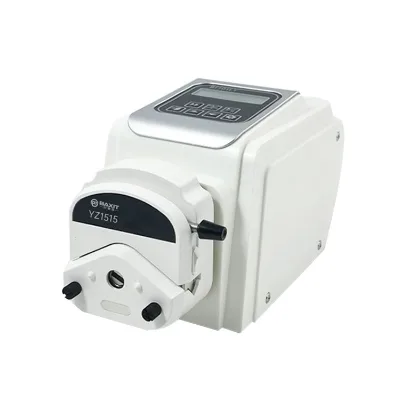
In the context of the available market data, specific configurations such as the BXT-BT100-2J and BT600MH models illustrate the diversity in drive architectures. Some units utilize a stepper motor, offering precise speed resolution of 0.1rpm, which is critical for applications requiring exact dosing volumes. The speed range for these high-precision drives can extend from 0.1rpm up to 100rpm or even 600rpm depending on the specific motor and pump head combination. The drive weight is a significant factor for mobile or portable setups, with observed units weighing approximately 2.35KG for the drive unit alone, while the total gross weight including packaging may reach 2.500 kg.
The power consumption profile is another critical technical specification. While some industrial-grade units may draw higher power, specific models in the current market are designed for efficiency with power consumption under 30W or 50W. The power supply requirements vary; while the core keyword specifies DC power supply, many commercial listings also support AC90-265V inputs, offering flexibility for different facility power infrastructures. Buyers must verify the actual input voltage and current requirements of the specific model to ensure compatibility with their existing DC power sources or battery systems.
Technical Specifications and Performance Metrics
Evaluating the technical specifications requires a granular look at flow rates, pressure capabilities, and physical dimensions. The maximum flow rate is a primary determinant of the pump's utility. For instance, specific configurations like the BXT-BT100-2J paired with YZ1515 pump heads can achieve recommended flow rates of 380mL/min, while dual-channel setups can reach 380ml/min or 270ml/min depending on the tubing size. Other high-performance models boast a maximum flow of 2280ml/Min, indicating a wide range of throughput capabilities across different product lines.
The pressure rating is often a limiting factor in peristaltic pump selection. The available data indicates that pressure specifications are often categorized as "Other" or generic, suggesting that the maximum pressure is dependent on the specific tubing material and the pump head design rather than a fixed motor output. Buyers should verify the maximum backpressure the system can handle before selecting a model for high-viscosity fluids or long-distance transfer applications.
Physical dimensions and packaging are essential for logistics and installation planning. The single package size for compact units is observed at 13.8 x 15.8 x 22 cm, with a standard product size of 138x153x220(mm). Larger industrial units may have standard dimensions of 40x26x40cm. The outlet size is another critical metric, with some models supporting a maximum outlet size of 7.9 mm. This constraint dictates the tubing diameter and the resulting flow dynamics.
The following table summarizes key technical observations from the current market data to assist in initial screening:
| Feature | Observed Specification Range | Application Implication |
|---|---|---|
| Speed Resolution | 0.1 rpm | High-precision dosing required |
| Speed Range | 0.1 - 100 rpm (up to 600 rpm) | Versatile for low and high throughput |
| Power Consumption | <30W to <50W | Suitable for energy-efficient or battery ops |
| Max Flow Rate | 380 mL/min to 2280 mL/min | Determines batch size and cycle time |
| Outlet Size | Max 7.9 mm | Limits tubing diameter and viscosity handling |
| Drive Weight | 2.35 KG | Portable and lightweight installation |
| Protection Grade | IP31 | Basic splash protection; not submersible |
Compliance, Certification, and Safety Standards
In the B2B procurement of industrial equipment, compliance with international standards is non-negotiable. The market data indicates that reputable suppliers often provide certifications such as CE and ISO9001. These certifications are critical for verifying that the manufacturing process adheres to quality management systems and that the electrical safety of the device meets European and global standards. Specifically, the presence of "CE, ISO9001" in product attributes suggests a baseline level of regulatory compliance for the electrical components and the overall build quality.
Safety ratings, such as the Protection Grade (IP rating), are equally important. An observed IP31 rating indicates protection against solid objects larger than 2.5mm and vertically dripping water. This is suitable for general laboratory or indoor industrial environments but may not be sufficient for harsh, wet, or outdoor conditions. Buyers must verify if the specific model meets the IP rating required for their specific operating environment. If the application involves exposure to dust or water jets, a higher IP rating (e.g., IP54 or IP65) must be explicitly requested, as the standard IP31 may not suffice.
Furthermore, the "Pipe Type" and "Flow Type" mentioned in certification contexts often refer to specific testing protocols for the tubing and the flow characteristics. Buyers should ensure that the pump head and tubing combination are tested for the specific chemical compatibility of the fluid being pumped. The certification documents should explicitly state the tested materials and the conditions under which the pump was validated. Without these specific details, relying solely on the "CE" mark may be insufficient for high-risk applications in the pharmaceutical or mining industries.
Cost Drivers and Procurement Economics
The cost of a DC power supply peristaltic pump is influenced by several variables, including the motor type, control complexity, and customization options. The observed price range in the market spans from $1 to $16,000, reflecting the vast difference between simple, manual units and complex, automated systems with advanced communication interfaces. The lower end of the spectrum typically covers basic manual units or simple pump heads, while the higher end includes systems with RS485 communication, digital displays, and OEM customization.
Customization is a significant cost driver. The availability of OEM and ODM support allows buyers to tailor the pump to specific application needs, such as custom branding, specific voltage requirements, or unique mounting configurations. However, these customizations often come with Minimum Order Quantities (MOQ) ranging from 1 to 500 units. For small-batch procurement, buyers may face higher per-unit costs or limited customization options. Conversely, large-volume orders can leverage economies of scale to reduce the unit price significantly.
The packaging type also impacts logistics costs. While some units are shipped in wooden boxes, which offer superior protection for heavy or delicate components, others use standard cartons. The choice of packaging can influence the shipping weight and volume, thereby affecting the total landed cost. Additionally, the warranty period, typically observed as 1 year, should be factored into the total cost of ownership. A longer warranty or extended service agreement might justify a higher initial purchase price by reducing long-term maintenance risks.
Typical Applications and Industry Suitability
Peristaltic pumps are uniquely suited for industries where fluid purity and contamination control are paramount. The "Negative Pressure" filling principle and the "Single-Room Feeding" structure make these pumps ideal for the pharmaceutical industry, where sterile processing and precise dosing are critical. The ability to handle liquids without the fluid contacting the pump mechanism ensures that there is no cross-contamination between batches, a requirement often mandated by regulatory bodies.
In the food and beverage industry, the same hygiene standards apply. The pump's ability to handle a wide range of viscosities and its gentle pumping action (which does not shear sensitive fluids) make it suitable for processing dairy products, juices, and sauces. The "Liquid" material type specification confirms the pump's suitability for fluid transfer, but buyers must ensure the tubing material is food-grade if the application involves consumable products.
The mining industry is another key application area, where peristaltic pumps are used for slurry transfer and chemical dosing. The robustness of the pump head and the ability to handle abrasive fluids (depending on the tubing material) are essential here. The "Pharmaceutical Industry, Mining Industry, Food And Beverage Industry" application list highlights the versatility of these units. However, buyers must verify that the specific model's pressure and flow capabilities match the demands of their specific mining or processing line.
Supplier Evaluation and Quality Assurance
When evaluating suppliers, buyers should look beyond the basic product listing and assess the depth of their technical support and quality assurance processes. The presence of "OEM" and "ODM" support indicates a supplier's willingness to collaborate on product development, which is a positive sign for long-term partnerships. However, buyers must verify the supplier's ability to provide detailed technical documentation, including wiring diagrams, tubing life charts, and maintenance schedules.
Quality control should be a primary focus. The "1" year warranty suggests a standard industry offering, but buyers should inquire about the specific terms of the warranty, such as whether it covers labor, parts, or both. Additionally, the "Physical button or external control" adjustment method implies a level of user interaction that should be tested for reliability. Suppliers who offer RS485 communication capabilities provide an avenue for integration into larger automation systems, but the stability of this communication protocol must be verified through testing.
The origin of the product is also a factor in supplier evaluation. While the data lists origins such as Qingzhou City, Shanghai, and Hebei, the specific manufacturing facility's reputation and capacity should be investigated. Buyers should request evidence of the supplier's production capacity and their track record in delivering similar products. The "Single package size" and "Single gross weight" data points can be used to verify the supplier's consistency in packaging and shipping, which reflects their attention to detail.
Long-Term Procurement and Maintenance Considerations
Sourcing a peristaltic pump is not just about the initial purchase; it involves planning for the entire lifecycle of the equipment. The "Speed Resolution" of 0.1rpm and the "Speed Range" of 0.1-100rpm (or higher) suggest that the pump is designed for precise, long-term operation. However, the wear and tear on the tubing is a constant factor. Buyers must establish a maintenance schedule for tubing replacement, as the tubing is the consumable component that directly affects performance.
The "External Control" features, such as start/stop, direction, and speed control, offer flexibility but also introduce potential points of failure. Ensuring that the control interface is robust and compatible with the buyer's existing control systems is essential for long-term reliability. The "LED digital display" provides visual feedback, but the durability of the display in harsh environments should be considered.
Finally, the "Customization" availability allows for future-proofing the procurement. As application requirements evolve, the ability to modify the pump head or control interface can extend the useful life of the equipment. Buyers should negotiate terms that allow for future upgrades or modifications without incurring prohibitive costs. By focusing on these long-term considerations, buyers can ensure that their investment in a DC power supply peristaltic pump delivers consistent value and performance over time.
FAQs
What is the speed resolution for these pumps?
The speed resolution is 0.1rpm, allowing for precise dosing control. This feature is critical for applications requiring exact volume measurements in pharmaceutical or food processing lines.
Can these pumps handle liquid materials in the mining industry?
Yes, the pumps are designed for liquid materials and are suitable for the mining industry. They utilize a negative pressure filling principle to transfer fluids without cross-contamination.
Which certifications do these peristaltic pumps typically hold?
These pumps typically hold CE and ISO9001 certifications. These standards verify that the manufacturing process meets quality management systems and that electrical safety complies with global regulations.
How is the power supply configured for these units?
The units support AC90-265V power supply inputs. While the core keyword mentions DC, the listed models offer flexibility to operate on standard AC voltages for various facility infrastructures.
What is the maximum flow rate available for these models?
The maximum flow rate can reach 2280ml/Min depending on the configuration. Specific setups like the BXT-BT100-2J with YZ1515 heads offer recommended rates around 380mL/min.
Are OEM customization options available for these pumps?
Yes, OEM and ODM customized support are available for these pumps. Buyers can request specific branding or modifications, though minimum order quantities may apply for such customizations.
What is the protection grade for the pump housing?
The protection grade is IP31, offering basic splash protection. This rating is suitable for indoor industrial environments but may not be sufficient for harsh, wet, or outdoor conditions.